

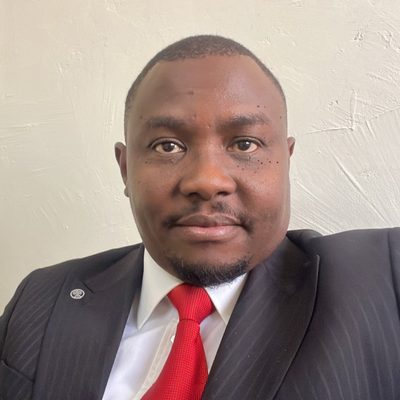

In late March 2012, Abdel Kader Haidara was travelling in Burkina Faso when Tuareg rebels and Islamist fighters began their march on Timbuktu. He got home just hours after they seized the city. Soon pickup trucks draped in black flags were patrolling the streets.
Haidara was not a soldier. He was a librarian. And his city held one of the greatest written treasures in Africa: hundreds of thousands of handwritten manuscripts, kept in about 45 libraries, covering astronomy, poetry, history and law, as well as medicine and mathematics. He was sure the occupiers would come for them.
The books that were not supposed to exist
For centuries, Europe told itself that Africa had no writing. The Harvard scholar Henry Louis Gates Jr. has pointed out that Hegel, Kant and other Enlightenment philosophers argued that Africa had no tradition of writing, and therefore no history, an argument that helped justify the slave trade.
Timbuktu answers that lie on every page. Its production of manuscripts peaked in the 15th and 16th centuries, when it was a trading hub on the Niger and a centre of learning. "It's been said that all the history of Africa is oral," Haidara has said. "We have more than 400,000 manuscripts here written uniquely by the hands of Africans."
The young man who wanted to go into business
Haidara almost never became a librarian. When his father, the collector Mamma Haidara, died in 1981, the director of the Ahmed Baba Institute asked the 17-year-old to take his place. Haidara said no: he wanted to go into business and make money. The director kept at him: "You are the custodian of a great intellectual tradition."
He gave in, and then gave his life to it, travelling the Niger by canoe to persuade wary families to bring their manuscripts out of hiding. In 1996, a Libyan delegation offered to buy his whole family collection at any price. He refused: "This is the heritage of Mali, of a great nation. It's not for sale."
Trunks, torches and canoes
About a month into the occupation, Haidara and his nephew Mohammed Touré began buying metal trunks in Timbuktu's markets. When those ran out they bought more further south, and when those ran out they took oil drums to a craftsman in Mopti, who hammered them into trunks. Volunteers packed manuscripts behind locked doors, often by flashlight because the power had been cut. At night, mule carts moved the chests to safe houses around the city. Touré was once caught with a trunk and arrested for theft. He argued his case with Quranic verses while his uncle rallied imams to vouch for him, and he was released after 24 hours.
Then came the long road south. With money from donors including the Prince Claus Fund and the German Foreign Office, couriers carried two or three boxes per car, often hidden under crates of fruit and vegetables, to Bamako. When the roads closed, they used boats on the Niger. Near Lake Debo, gunmen seized a flotilla carrying about 75,000 manuscripts and let it go only after Haidara promised them a ransom over the phone.
The counts differ. The BBC reported 2,400 metal boxes holding an estimated 285,000 manuscripts, which the Gerda Henkel Foundation puts at about 95% of the total. National Geographic gives 350,000 from 45 libraries. Either way, it was an extraordinary rescue, run largely by ordinary people.
The fire
In January 2013, as French and Malian troops advanced, the retreating militants set fire to manuscripts at the Ahmed Baba Institute. A UN expert mission later found that more than 4,000 manuscripts had been destroyed. It was a real loss. But the BBC found that the libraries had been all but empty for months. For most of the collection, the fire came too late.
Why now
Pages that had survived centuries of desert air began to suffer in Bamako's humidity, and Haidara estimated that about 20% were severely damaged. So the work turned to conservation and copying. With Malian partners at SAVAMA-DCI, the Hill Museum & Manuscript Library has now digitised about 308,000 manuscripts in 4.35 million images. Since 2022, more than 40,000 pages can be read by anyone online.
And in August 2025, the first crates went home. An army truck delivered about 5.5 tonnes of manuscripts to the Ahmed Baba Institute, the start of the return of more than 27,000 documents. "We now have a responsibility to protect, digitise, study and promote these treasures," Mali's higher education minister, Bouréma Kansaye, said at the ceremony.
What we still haven't written down
The lesson of Timbuktu is not only that Africa wrote. It is that knowledge survives only when someone records it, protects it and keeps using it. When the threat came, the books could be counted, packed and moved, because they existed on paper.
Much of Africa's know-how today has no such protection. It lives in the head of the master miller who knows the right setting for each batch, the founder who keeps the prices in a notebook, the elder who remembers how a thing was once made. When that person leaves, the knowledge leaves too.
Haidara turned down a business career and ended up running a logistics operation that would test any company, because he understood what the books were worth. So here is the question his story leaves us: what knowledge in your company, your family or your community is still unwritten?